
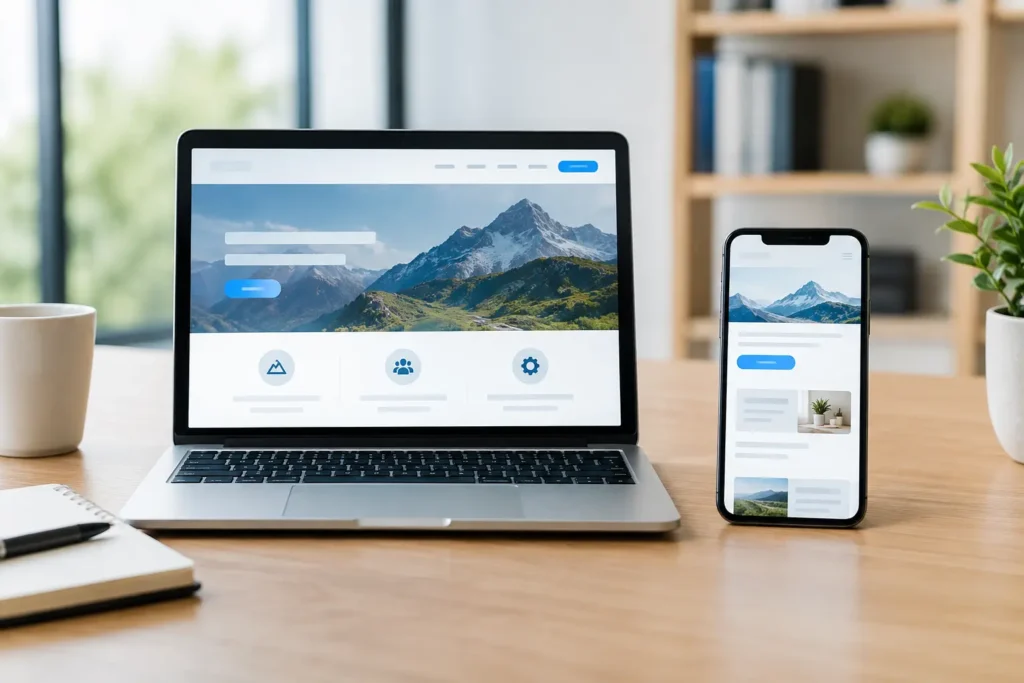
A homeowner clicks your Google ad after searching for an emergency plumber. They do not want to browse your company history, read three service pages, and hunt for a phone number. They want to know whether you can help, how fast you can arrive, and how to contact you. That moment captures the real difference in landing pages versus websites: one is designed to drive a specific action, while the other supports the bigger relationship.
For most small and midsize businesses, this is not an either-or decision. A strong website creates credibility and long-term visibility. Purpose-built landing pages give paid campaigns, promotions, and focused offers a better chance to turn attention into leads. The right choice depends on where a prospect is coming from, what they need next, and what action matters most to your business.
What Is a Website Built to Do?
A website is your digital storefront. It gives people a place to understand who you are, what you offer, where you operate, and why they should trust you. It is also the foundation for search engine optimization, brand consistency, and customer research.
A typical business website includes a home page, service or product pages, an about page, contact information, testimonials, and helpful content. A local Orlando contractor, for example, may use dedicated pages to explain roofing repair, replacement, inspections, service areas, and financing. Each page can answer a different question a potential customer may have before reaching out.
That depth is valuable because not every visitor is ready to convert immediately. Some are comparing providers. Some are validating that you are legitimate. Others are researching a problem and may not need your services for weeks or months. Your website helps you earn trust across that longer buying process.
A well-built website also gives search engines more context. Clear page structure, useful content, responsive design, and locally relevant service information can help qualified prospects find you through organic search. It takes time to build that visibility, but the payoff can continue long after a specific ad campaign ends.
What Is a Landing Page Built to Do?
A landing page is a focused campaign page with one primary goal. That goal might be requesting a quote, scheduling a consultation, downloading a guide, calling your office, registering for an event, or claiming a limited-time offer.
Unlike a full website, a landing page removes unnecessary choices. The headline speaks directly to the visitor’s intent. The copy explains the offer and its benefit. A form, phone number, or call-to-action button makes the next step obvious.
Imagine a dental practice running Google Ads for teeth whitening. Sending every click to the home page forces visitors to navigate a broad site built for many services. Sending that traffic to a landing page about a whitening special, appointment availability, pricing guidance, and a short booking form keeps the experience aligned with the ad that brought them there.
That alignment matters. When the message, audience, and next step all match, visitors are less likely to feel lost or distracted. The result is often stronger conversion rates and clearer campaign data.
Landing Pages Versus Websites: The Core Differences
The biggest difference is not appearance. Both can be professionally branded, mobile-friendly, and visually compelling. The difference is purpose.
A website supports exploration. It gives visitors room to learn, compare, and move between topics. Navigation is helpful because a visitor may need to view service details, reviews, locations, FAQs, or contact options before making a decision.
A landing page supports action. It narrows the path around a single offer or campaign. Navigation is often limited or removed because every additional link can pull attention away from the desired outcome.
The traffic source is different, too. Websites attract visitors from branded searches, organic search results, referrals, social profiles, and direct visits. Landing pages are especially effective for paid search, paid social campaigns, email promotions, direct mail QR codes, and other channels where you control the message that brings someone in.
Measurement becomes more precise on a landing page. If one page promotes a free estimate for a specific service, you can see how many people submitted that exact form, called from that page, or booked an appointment. A website can track conversions as well, but multiple pages and visitor paths can make it harder to isolate which message did the work.
When a Website Should Come First
If your business has little or no credible online foundation, start with the website. Driving ad traffic to a weak, outdated, or incomplete online presence can waste budget and create doubt at the moment people are deciding whether to contact you.
Your website should come first when you need to establish core information: who you serve, what problems you solve, what makes your business different, and how people can reach you. It is also the priority when organic visibility is a major growth goal. Search engine optimization needs quality pages that reflect your services, locations, expertise, and customer needs.
A website is particularly essential for businesses with multiple offerings or a considered sales process. Professional firms, medical practices, home service providers, and B2B companies often need space to explain qualifications, processes, credentials, case examples, and common client questions. A single landing page cannot carry all of that responsibility.
The trade-off is that websites are broader by design. A visitor may have many paths to take, which is useful for research but less focused for a time-sensitive campaign. That is why even a high-performing website may not be the best destination for every advertisement.
When a Landing Page Is the Better Move
Choose a landing page when you have a defined audience, a specific offer, and a clear conversion goal. This is common when launching Google Ads, promoting a seasonal service, building an email list, or testing a new market message.
A Florida HVAC company, for instance, might run a summer campaign for AC tune-ups. Rather than directing paid traffic to a general services page, it can use a landing page that addresses rising temperatures, explains the tune-up offer, includes trust signals, and asks visitors to schedule service. The campaign has one job, and the page supports that job.
Landing pages also make testing more practical. You can compare headlines, calls to action, forms, offer language, and audience messages without redesigning your full site. If one version consistently produces more qualified leads, that insight can inform future advertising and website improvements.
Still, a landing page is not a substitute for a website. Visitors may leave the page to research your company before converting. If they find an outdated site, inconsistent branding, or missing contact information, the campaign loses credibility. Focused conversion pages work best when they are connected to a trustworthy overall presence.
Build the Two to Work Together
The most effective strategy treats your website and landing pages as connected parts of the same marketing system. Your website builds authority and gives prospects confidence. Your landing pages turn campaign traffic into measurable opportunities. Search, ads, social media, branding, and content should all reinforce the same promise.
Start by identifying the action that matters most for each campaign. A law firm may want consultation requests. An ecommerce retailer may want purchases. A local service business may prioritize calls and estimate forms. Once the action is clear, create a landing page that makes it easy to take that step and connect it to tracking that shows what happened next.
Then make sure the campaign message matches what visitors see after the click. If an ad says “Same-Day Water Damage Help,” the landing page should immediately address same-day response, service availability, and how to get help. Generic copy weakens relevance and makes prospects wonder whether the offer was real.
Your website should support that campaign behind the scenes. Keep your branding consistent, maintain accurate business information, publish helpful service content, and make trust indicators easy to find. Reviews, certifications, project examples, team information, and clear service descriptions can help prospects feel more comfortable when they research you further.
A Practical Decision for Your Next Campaign
Ask one question before selecting a destination: what should this visitor do next? If the answer is “learn about our company and compare our services,” send them to a relevant website page. If the answer is “request this estimate, book this appointment, or claim this offer,” a dedicated landing page is usually the stronger choice.
Do not judge performance by clicks alone. A campaign can generate plenty of traffic while producing few meaningful inquiries. Track form submissions, calls, booked appointments, sales, and lead quality. Those numbers reveal whether your page is attracting the right people and giving them a compelling reason to act.
Growth rarely comes from choosing a website or a landing page once and leaving it alone. It comes from giving each visitor a clear next step, watching how real people respond, and continuing to improve the path from first click to customer conversation.