
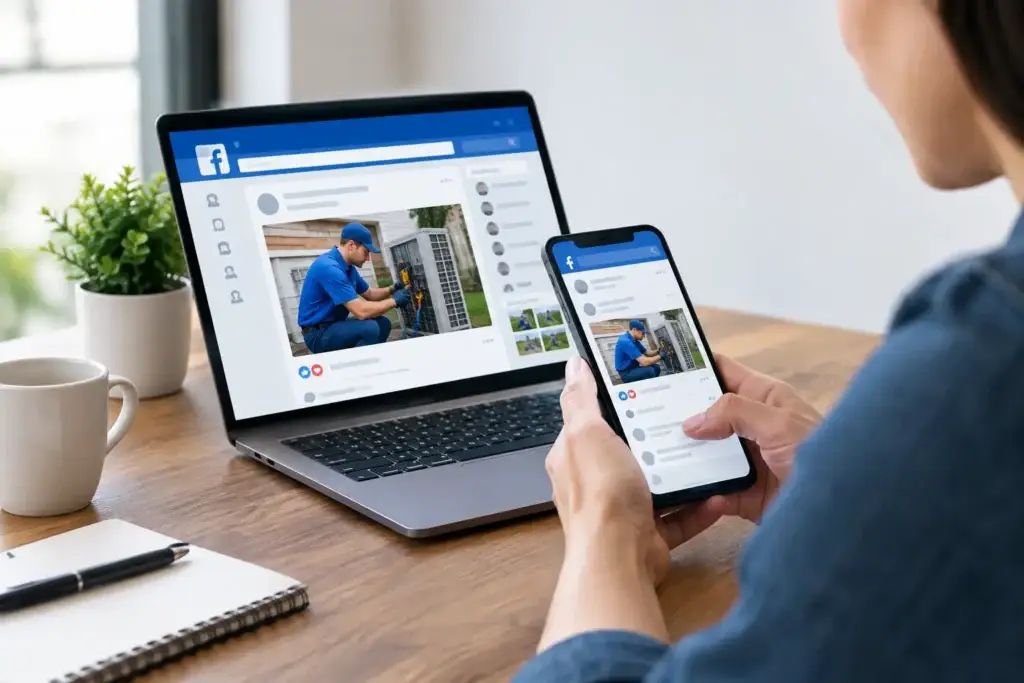
A homeowner’s water heater fails at 8 p.m. A parent needs a reliable tutor before finals. A business owner needs an electrician before opening tomorrow morning. These are not casual browsing moments. They are high-intent local needs, and Facebook ads for local service businesses can put your company in front of the right people before they default to the first name they recognize.
For Omaha-area service providers and growing local businesses, Facebook is not a replacement for a strong website, Google Ads, or local SEO. It is a practical way to create demand, stay visible in your service area, and turn attention into calls, form submissions, and booked appointments. The difference between wasted ad spend and measurable growth usually comes down to campaign strategy, the offer, and what happens after a prospect responds.
Why Facebook Works for Local Service Businesses
People do not open Facebook with the same intent they bring to Google. They may not be actively searching for roof repair, legal advice, pest control, or HVAC maintenance at that exact moment. But Facebook gives local businesses an opportunity to reach likely customers based on where they live, what life stage they are in, and how they engage with relevant content.
That makes the platform especially useful for services with recurring needs, seasonal demand, or a longer consideration period. A landscaping company can promote spring cleanup before lawns become overgrown. A dental office can reach families with a new-patient offer. A remodeling contractor can build demand among homeowners who have been considering a kitchen upgrade but have not searched for a contractor yet.
The strongest results often come from pairing Facebook’s demand creation with search marketing’s demand capture. A prospect may see your ad on Facebook, remember your name later, and search for your business or service on Google. That is why consistent branding, a professional website, and accurate tracking matter. Marketing channels work better when they support one another.
Start With the Job You Want to Book
A Facebook campaign should not begin with an audience setting or a polished image. It should begin with one business outcome. Do you need more emergency calls? Are you trying to fill a schedule with estimates? Do you want qualified consultations for a higher-ticket service? The answer affects every part of the campaign.
A general message such as “We offer great service” gives people very little reason to act now. A focused campaign gives them a clear next step. For example, a local HVAC company might promote a pre-season tune-up, while a personal injury attorney might offer a confidential case review. A cleaning company could target recurring residential service rather than trying to advertise every service it offers in one ad.
Specificity also improves lead quality. If your ad is designed to generate cabinet refinishing estimates, the landing page and lead form should make that clear. Otherwise, you may pay for inquiries from people who want unrelated repairs, are outside your service area, or are only looking for a price with no real intention to move forward.
Build a Local Audience Without Making It Too Narrow
Geographic targeting is the foundation of Facebook advertising for local service businesses. Begin with the locations you actually serve, then adjust based on travel time, job value, and staffing capacity. A plumbing company may need a tight radius for urgent calls, while a commercial contractor may reasonably pursue projects across several counties.
Avoid the temptation to layer too many interests and demographic filters onto a small local audience. In a market like Omaha, an audience can become too limited quickly. When Facebook has very few people to reach, delivery becomes less efficient and the platform has less room to identify people likely to respond.
Start with a sensible service area and only add audience signals that directly support the offer. Homeownership may matter for exterior remodeling, while parents may be relevant for youth programs or family-focused health services. For many local campaigns, the best initial approach is a broader local audience paired with a clear, service-specific message.
Retargeting deserves its own place in the strategy. People who have visited your service pages, watched your videos, engaged with your Facebook or Instagram profile, or started a form already know something about your business. A follow-up ad can answer common concerns, highlight reviews, show completed work, or create a reason to schedule now. These audiences are usually smaller, but they can be highly valuable.
Choose an Offer That Feels Worth Responding To
Discounts are not the only way to make an offer compelling. In fact, deep discounts can attract price shoppers who are unlikely to become profitable customers. The better approach is to match the offer to the customer’s level of urgency and the value of the service.
For an emergency service, speed and availability may be the offer. For planned services, a free estimate, consultation, inspection, or design review can lower the barrier to getting started. For recurring services, an introductory package may help prospects try your business with less perceived risk.
Your ad should make three things easy to understand: what you do, where you do it, and what the person should do next. A strong headline might identify the service and location, while the primary text addresses a real customer problem. Include a direct call to action such as Request an Estimate, Call Now, or Schedule a Consultation.
Trust signals carry significant weight in local marketing. Use real project photos when possible, not generic stock images that could represent any business in any city. Mention years in business, licensed or insured status when applicable, local experience, recognizable service areas, or a satisfaction commitment you can genuinely support. The goal is not to make the ad crowded. It is to give a prospect enough confidence to take the next step.
Send Leads Somewhere Built to Convert
Facebook can send people to an instant lead form, a dedicated landing page, or a phone call. There is no universal winner. The right choice depends on your service, the urgency of the need, and your ability to follow up.
Instant forms reduce friction because prospects can submit their details without leaving Facebook. They can work well for estimates, consultations, and promotions, but they may produce lower-intent leads if the form is too easy to complete. Add a few practical qualifying questions, such as ZIP code, type of service needed, project timeline, or preferred contact method. Do not turn the form into an application. Ask only what your team will use to prioritize the lead.
A dedicated landing page can produce fewer leads but stronger ones, particularly for high-consideration services such as remodeling, legal services, or commercial work. The page should continue the ad’s message, display proof of credibility, and make the contact action obvious. If a visitor clicks an ad for a bathroom remodeling consultation and lands on a cluttered general homepage, you create unnecessary friction.
For urgent needs, call-focused ads may be the best fit. Just make sure someone can answer promptly. Paying for calls that go unanswered is one of the fastest ways to weaken campaign performance and customer trust.
Follow Up Faster Than Your Competitors
The campaign does not end when a lead form is submitted. Local service businesses often lose good opportunities because responses are delayed, calls are missed, or leads are never entered into a consistent follow-up process.
A prospect who asks for an estimate is likely contacting more than one provider. Responding within minutes rather than hours can significantly improve the chance of booking the conversation. Use a system that alerts the right person immediately, confirms receipt to the prospect, and establishes a clear ownership process for each new lead.
Speed alone is not enough. The first response should be helpful and specific. Confirm the requested service, ask the next necessary question, and offer a clear time for a call, estimate, or appointment. If the lead does not respond, follow up thoughtfully. A second call, text, or email can recover opportunities that would otherwise disappear.
Measure Revenue, Not Just Cheap Leads
A low cost per lead can look impressive in a report while producing very little revenue. The metrics that matter most are qualified leads, booked appointments, completed jobs, and revenue tied to campaign spend. That requires coordination between advertising data and your sales or scheduling process.
Track form submissions, calls, landing page activity, and appointment requests. Then review which campaign generated leads your team could actually contact and close. A campaign that costs more per inquiry may still be the better investment if it produces larger jobs, repeat customers, or stronger close rates.
Creative testing is part of ongoing optimization. Test different offers, images, headlines, and calls to action, but change one meaningful variable at a time. Give each version enough budget and time to gather useful data. Quick assumptions based on a handful of clicks can lead to poor decisions.
TLK Creative Enterprises approaches paid social as part of a connected growth plan, combining audience research, conversion-focused messaging, performance analysis, and ongoing refinements. For local businesses, that partnership matters because the best ad is only as effective as the experience that follows it.
Your next customer may not be searching right now, but they are likely seeing local businesses in their feed. Give them a clear reason to remember yours, an easy way to reach you, and a customer experience that makes acting on that first click worthwhile.