
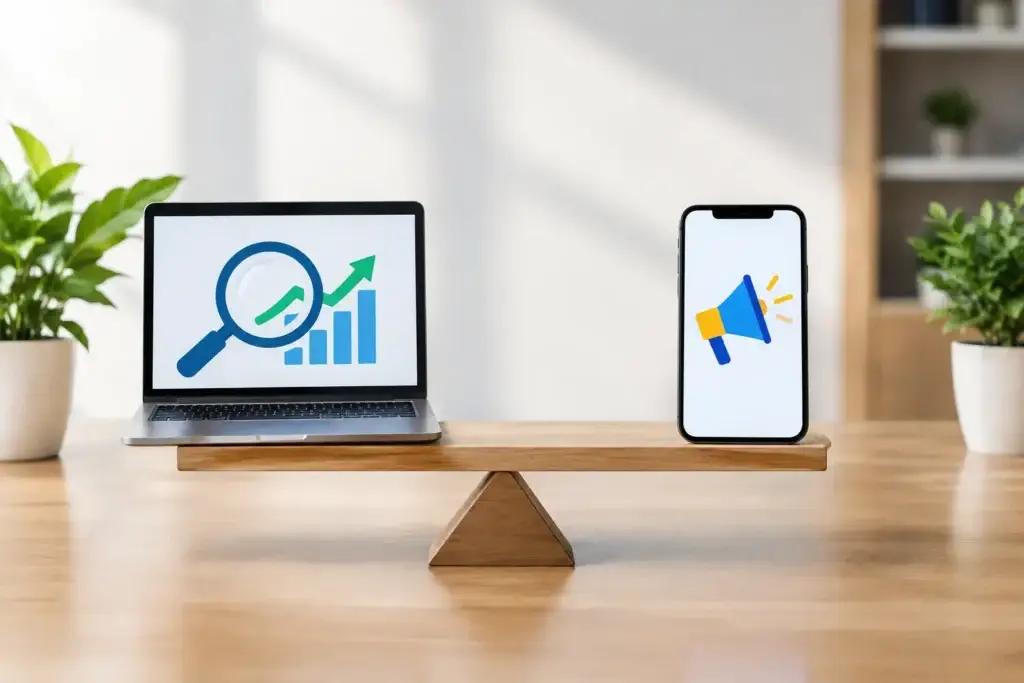
A homeowner searches for an emergency plumber at 8:15 p.m. A prospect compares local accounting firms before filing season. A shopper looks for a product they need this week. In each case, the businesses that appear in search have an opportunity to earn attention when it matters most. The SEO versus PPC decision is not about choosing a winner in every situation. It is about deciding how your business can show up, compete, and convert that attention into measurable growth.
For small and midsize businesses, search marketing works best when it supports a clear business goal. You may need leads quickly, stronger visibility over time, a better return on an existing website, or all three. Understanding how SEO and PPC operate helps you put your budget behind the channel that fits the moment.
SEO Versus PPC: The Core Difference
Search engine optimization, or SEO, improves your website’s ability to earn unpaid visibility in search results. It involves technical website health, useful page content, local search signals, keyword targeting, site structure, and credibility. When someone searches for a service you offer, strong SEO increases the chance that your business appears as a relevant, trusted option.
Pay-per-click advertising, or PPC, places paid ads in front of people searching for selected terms. With platforms such as Google Ads, you can target specific services, locations, audiences, devices, and times of day. You generally pay when someone clicks the ad, although campaign costs and bidding models vary.
The visible difference is simple: SEO earns organic placement, while PPC buys immediate placement. The strategic difference is more nuanced. SEO often takes longer to build but can create lasting visibility. PPC can create traffic quickly, but that traffic stops when the budget stops. Both channels require thoughtful planning, a credible offer, and a website built to convert.
When SEO Is the Better Investment
SEO is a strong fit when your business wants to build a dependable foundation for long-term discovery. A well-optimized website can continue attracting qualified visitors from service pages, local searches, educational articles, and branded searches without paying for every individual click.
This matters for businesses with recurring search demand. An Orlando HVAC company may want visibility for air conditioning repair, maintenance plans, and installation. A law firm may need to be found for practice-area searches year-round. A retailer may benefit from product and category pages that help shoppers compare options before purchasing. When people repeatedly search for what you offer, organic visibility becomes a business asset.
SEO also supports credibility. Many consumers research before they contact a company, especially for higher-cost or high-trust decisions. A site with clear service information, helpful answers, fast mobile performance, accurate local details, and evidence of expertise gives visitors more reasons to stay and take the next step.
That said, SEO is not instant. New or poorly maintained websites may need technical improvements, content development, local profile optimization, and time for search engines to understand the changes. Competitive industries can require consistent work over many months. If your business needs calls this week, relying on SEO alone can leave a gap.
What SEO needs to produce value
SEO performs best when it is connected to the full customer journey. Ranking for a broad keyword is less useful if the landing page does not explain your service, establish trust, or make contacting you easy. Search visibility should lead visitors toward an action, whether that is requesting a quote, calling your team, booking an appointment, or making a purchase.
A conversion-oriented website is especially important. Strong title tags and page copy can bring in the right audience, but outdated design, slow load times, confusing navigation, or weak calls to action can waste that opportunity. SEO is not simply a rankings project. It is a visibility and conversion system.
When PPC Makes More Sense
PPC is often the practical choice when speed, targeting, or campaign control matters most. A paid campaign can begin generating data and traffic shortly after launch, which is useful for new services, seasonal offers, events, promotions, and businesses entering a competitive market.
Consider a local contractor with open availability after a slow period. Rather than waiting for a new service page to climb in organic results, the contractor can run ads for high-intent searches in selected service areas. A professional firm can promote a timely consultation offer. An e-commerce business can test demand for a new product category before investing heavily in inventory or long-form content.
PPC also gives businesses a high level of control. You can set a budget, pause a campaign, adjust geographic targeting, exclude irrelevant searches, and direct clicks to a landing page designed for one offer. That makes paid search valuable for testing. If people click an ad but do not complete a form or call, the data can reveal issues with the offer, page experience, audience, or keyword selection.
The trade-off is cost. Competitive keywords can be expensive, particularly in legal, home services, healthcare, financial services, and other high-value categories. A campaign with broad targeting or weak management can burn through budget on clicks that never become qualified leads. PPC is measurable, but measurable does not automatically mean profitable.
PPC needs management, not just a budget
Effective paid advertising begins before the first ad goes live. It requires audience research, keyword selection, competitive awareness, a focused landing page, and a realistic definition of a qualified lead. After launch, performance should be reviewed regularly through search terms, click-through rates, conversion tracking, cost per lead, and lead quality.
For example, an ad that generates many phone calls may look successful on a dashboard. But if most callers are outside your service area or seeking a service you do not provide, the campaign needs refinement. Monthly reporting should connect ad activity to the outcomes that matter: legitimate inquiries, booked work, sales, and revenue opportunities.
The Budget Question: Short-Term Cost vs. Long-Term Value
Business owners often ask whether SEO or PPC is cheaper. The honest answer is that it depends on the market, your goals, and the state of your digital foundation.
PPC has a direct, visible cost. You can see what you spend and often estimate the cost of each lead. That clarity helps with short-term planning, but it can be misleading if the campaign is evaluated only by clicks. The real question is whether those leads turn into profitable customers.
SEO usually requires an ongoing investment in strategy, website improvements, content, and optimization. It may not produce immediate results, and there is no ethical way to guarantee a specific ranking. Over time, however, SEO can lower your reliance on paid traffic by helping your business earn attention for searches that match your services.
Think of PPC as renting prominent search visibility and SEO as building equity in your digital storefront. Renting can be the right move when you need exposure now. Building equity can be the right move when you want a stronger presence next quarter and next year. Most growing businesses benefit from balancing both rather than treating them as rivals.
How SEO and PPC Work Better Together
The most effective search strategy often uses SEO and PPC for different jobs. PPC can support immediate lead generation while SEO strengthens organic visibility. Paid search data can also improve your SEO decisions. If a keyword consistently produces high-quality leads through ads, it may deserve a dedicated service page, supporting content, or stronger local optimization.
SEO can make PPC more efficient, too. A fast, clear, mobile-friendly website with strong service pages gives paid visitors a better experience. Better landing pages can improve conversion rates, helping your budget go further. Organic research content can answer questions for people who are not ready to contact you on their first visit, keeping your brand present as they evaluate options.
There are situations where one channel should lead. A new business with no search presence may use PPC to generate early demand while its SEO foundation develops. An established company with strong rankings may use PPC selectively for its most profitable services, competitive search terms, or seasonal opportunities. A business with a limited budget may start with technical SEO and a tightly targeted paid campaign rather than spreading resources too thin.
Choosing the Right Search Strategy for Your Business
Start with your goal, not the marketing channel. If you need qualified leads quickly for a specific service, PPC may be the stronger first move. If you want to become easier to find across the services and locations you serve, SEO deserves sustained attention. If your site attracts visitors but does not generate inquiries, conversion improvements may be more urgent than increasing traffic from either source.
Then look at your sales cycle. Businesses with immediate, high-intent demand often benefit from paid search. Companies with longer research cycles need useful organic content and credible service pages that stay visible while prospects compare providers. Local businesses should also consider how well their website, business information, reviews, and service-area details support local search behavior.
The right plan is not based on a generic percentage of revenue or a promise that one channel will solve every visibility problem. It is built around your market, margins, capacity, competitive landscape, and the actions you want more customers to take.
A productive next step is to review where your current leads come from, which services create the most value, and what happens after someone reaches your website. From there, a focused SEO and PPC strategy can turn search visibility into the kind of momentum your business can measure.